

If you slipped on snow or ice in Ontario, one of the first questions is whether a 60-day written notice rule applies to your claim. In many private-property snow-and-ice cases, it does. But that 60-day rule is not the same as the usual 2-year lawsuit deadline, and it is not the same as the separate municipal notice rules that can apply to city sidewalks. Working with an experienced slip and fall lawyer early can keep the notice clock from quietly running out before the rest of the claim takes shape.
What The 60-Day Rule Actually Means
Ontario’s 60-day rule is a written notice requirement for certain snow-and-ice personal injury claims under the Occupiers’ Liability Act. The main practical point is simple: if your injury was caused by snow or ice and the claim falls under this rule, you may have to serve written notice within 60 days even though you still usually have a separate 2-year deadline to start the lawsuit.
| Deadline | What It Applies To | What You Must Do | Common Mistake |
| 60 days | Snow-and-ice personal injury claims under Ontario’s Occupiers’ Liability Act | Serve written notice with the required incident details | Thinking 60 days means you have 60 days to sue |
| 2 years | The basic limitation period for most civil claims | Start the lawsuit on time | Thinking notice alone starts the claim |
| 10 days | Municipal sidewalk snow-and-ice injury claims | Give the required municipal notice quickly | Treating a city sidewalk as an ordinary occupiers’ claim |
A plaza entrance, apartment walkway, condo common area, or store parking lot can raise the 60-day occupiers’ notice issue. A city sidewalk can trigger a different municipal framework. The statutes that create those separate deadlines are not interchangeable.
It Is A Written Notice Rule, Not The Whole Lawsuit
The 60-day rule is about preserving the right to bring the claim. It is not the same as filing a Statement of Claim in court. Ontario’s statute says that no action shall be brought for damages for personal injury caused by snow or ice against the listed person or persons unless, within 60 days after the injury, written notice is served in the required way.
That distinction matters because some people think sending a notice letter means the lawsuit has already started. It has not. Notice is one step. Starting the lawsuit is another. Treat both deadlines seriously from the beginning.
It Applies To Snow-And-Ice Personal Injury Claims Under The Occupiers’ Liability Act
Snow-and-ice injury claims that fall under Ontario’s Occupiers’ Liability Act usually involve private premises or non-municipal property settings, not every possible slip and fall.
That means the 60-day rule should be considered early if the fall happened at a store entrance, commercial plaza, apartment complex, condo common area, or other property where an occupier and possibly a winter contractor were responsible for the surface. If the fall did not arise from snow or ice, or if the location was a city sidewalk, a different analysis may be needed.
The Notice Has To Be Specific Enough To Identify The Event
Ontario’s statute requires written notice of the claim that includes the date, time, and location of the occurrence. That is the minimum starting point, and it is why vague descriptions like “outside the plaza” can create needless problems later.
In practice, a useful notice also briefly explains how the fall happened and what injury followed. The goal is not to write a perfect legal brief on day one. The goal is to identify the incident clearly enough that the right party can investigate the correct place and time without confusion.
Older Online Content Can Be Outdated
Some Ontario articles still discuss snow-and-ice slip claims as if the only timing issue is the standard lawsuit limitation period. That can be misleading because the current snow-and-ice notice rule was added by Ontario’s 2020 amendment to the Occupiers’ Liability Act.
So, if you find an older article that never mentions a 60-day written notice requirement, do not assume the rule does not exist. It may simply be describing the law before the amendment changed it.
Which Claims The 60-Day Rule Covers, And Which It Does Not
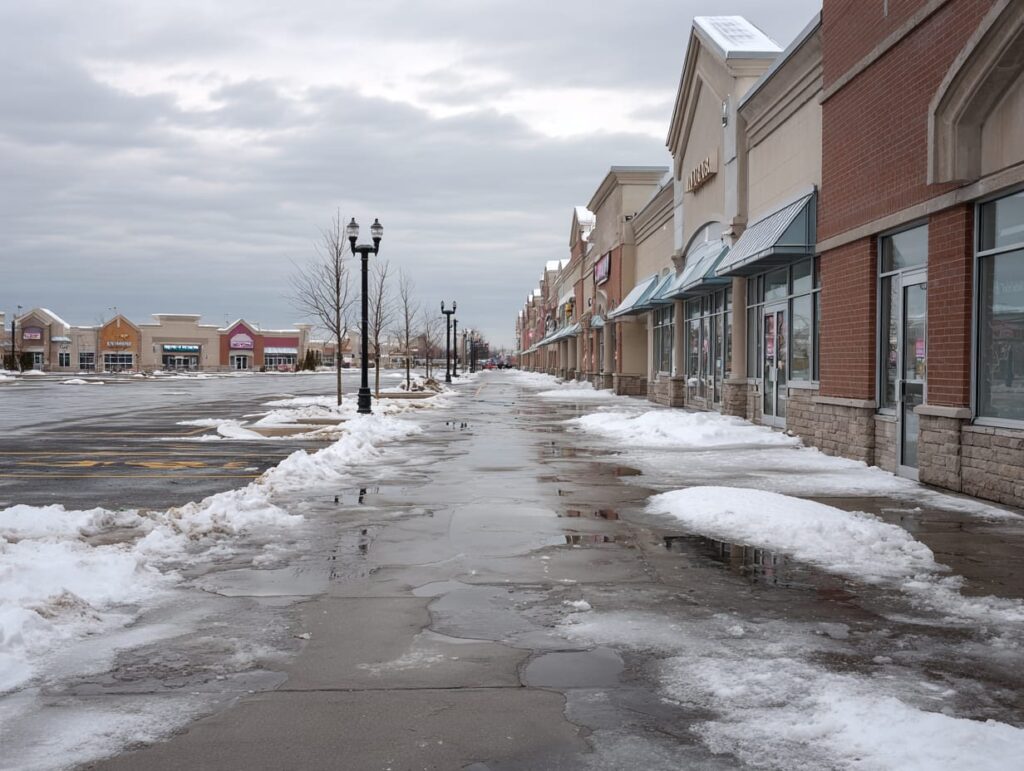
The hardest part for many readers is not understanding the rule once they find it. The hardest part is figuring out whether they are even reading the right rule. A snow-and-ice injury on a private walkway is not analyzed the same way as a snow-and-ice injury on a municipal sidewalk.
Snow-And-Ice Claims Against Occupiers
The 60-day rule sits inside the Occupiers’ Liability Act, which is why it belongs in the occupiers’ liability side of a winter fall analysis. If your case is really about the condition of premises controlled by a private occupier, that is the framework you need to check first.
This is also why readers should not assume the legal issue is just “who owns the property.” In many premises cases, the practical question is who controlled or maintained the area where the fall happened and whether a winter contractor was involved.
Snow-Removal Contractors Can Matter Too
Ontario’s statute does not limit the notice issue to the occupier alone. The listed persons include an occupier and an independent contractor employed by the occupier to remove snow or ice, which is why contractor identification matters early.
That is a common blind spot. People often focus only on the store, landlord, or property owner they can see. But the contractor side can matter too, especially where winter maintenance was outsourced. If you do not know who handled the snow and ice work, that is a reason to move faster, not slower.
City Sidewalk Claims Need Separate Analysis
A city sidewalk claim is not the same thing as an occupiers’ liability snow-and-ice claim against a private property occupier. Ontario’s Municipal Act and the City of Toronto Act create separate notice and liability rules for municipal sidewalk snow-and-ice injuries, including the gross-negligence standard for municipal sidewalk snow or ice cases.
If your fall happened on a city sidewalk, the question of whether you can sue a city for an icy sidewalk is governed by the municipal framework rather than the 60-day occupiers’ rule.
60-Day Notice Vs. 2-Year Lawsuit Deadline Vs. 10-Day Municipal Notice
This is the question most readers are really asking, even if they do not phrase it that way. The answer depends on the legal framework that governs the fall location and the type of claim being made.
Why Readers Mix These Deadlines Up
The confusion is understandable. One article says 60 days. Another says 2 years. A third says 10 days. Without a clean explanation of which rule belongs to which type of claim, a hurt person can waste valuable time following the wrong advice.
The safest approach is to think of these as separate clocks that may apply in different settings. The 60-day rule is a snow-and-ice occupiers’ notice issue. The 2-year period is the ordinary lawsuit limitation issue. The 10-day municipal rule belongs to city sidewalk claims. Sorting that out early can prevent a technical deadline from deciding the case before the facts are even reviewed.
The 2-Year Limitation Period Still Matters
Ontario’s basic limitation period is still important. The Limitations Act says that, unless the Act provides otherwise, a proceeding shall not be commenced after the second anniversary of the day on which the claim was discovered.
So, even if you served a proper 60-day notice, that does not mean you can ignore the court deadline. A notice letter is not a lawsuit. In most cases, both the early notice issue and the 2-year limitation issue need to be tracked at the same time.
Municipal Sidewalk Cases Use A Different Notice Framework
Municipal sidewalk snow-and-ice cases have their own statutory notice framework. For most Ontario municipalities, the Municipal Act says that, except in case of gross negligence, a municipality is not liable for personal injury caused by snow or ice on a sidewalk, and the same section includes the short notice requirement. Toronto has a parallel framework under the City of Toronto Act.
If the incident happened on a city sidewalk, do not rely on a private occupiers’ notice article to solve the deadline problem. The municipal framework applies instead.
What The Written Notice Should Say And How To Send It

If you are still within the 60-day window, the practical details of the notice matter most right now. The legal rule is strict enough that guessing or waiting can cause real damage.
Include The Date, Time, And Exact Location
Ontario’s Act requires the notice to include the date, time, and location of the occurrence. That is the statutory floor, not an optional detail.
Be exact about the location. If it happened near a store entrance, identify the store. If it happened in a parking lot, identify the section, closest unit, or nearest landmark. If it happened in a condo or apartment complex, identify the walkway, doorway, or stair area precisely. That detail helps the right party preserve the right evidence.
Explain The Incident Briefly And Clearly
The notice should also say, in simple terms, that you slipped because of snow or ice, where you fell, and that you suffered an injury. This is not the moment for a long legal argument. It is the moment for a clear, readable incident summary that lets the recipient investigate the right event.
A short, direct notice is usually better than a long, confused one. If you know there were witnesses, visible ice buildup, poor clearing, or a recurring hazard, you can mention that briefly. Keep the first notice practical.
Follow The Statutory Service Language
Ontario’s statute says the written notice must be personally served on or sent by registered mail to at least one person listed in section 6.1(2). That language is why people should not assume that a casual message, a quick phone call, or a general complaint will always be enough.
Because the Act works through service on listed persons, it is important to identify the occupier and any winter contractor as early as possible. Even where the legal minimum may be framed around service on at least one listed person, delay and uncertainty about who belongs in the notice can create avoidable arguments later.
Do Not Treat An Incident Report As A Complete Substitute
An incident report is still useful. So is a complaint to management. So is a record of what was said to security, an insurer, or building staff. But those things do not erase the need to treat the statutory notice requirement seriously.
In other words, report the fall if that makes sense, but do not assume reporting and legal notice are the same step. They may overlap factually, but you should not bet the whole claim on that overlap.
What If You Missed The 60-Day Deadline?
This is often the most stressful part of the issue. The honest answer is that missing the deadline is serious, but it is not always automatically fatal. Ontario’s Act includes a relief provision, so the analysis does not always end the moment the 60th day passes.
Late Or Insufficient Notice Is Not Always Fatal
The statute expressly contemplates the possibility of lack of notice or insufficiency of notice and gives a court some room to excuse the problem in the right case. That is why late notice should be treated as urgent, not as a reason to give up without advice.
Still, readers should not misunderstand that flexibility. A late-notice argument is a rescue issue, not a comfortable place to begin.
The Key Ideas Are Reasonable Excuse And No Prejudice
Ontario’s Act says the court may excuse the want or insufficiency of notice if there is a reasonable excuse and the defendant is not prejudiced in its defence. Those are the key ideas, and both matter.
Whether those conditions are met depends on the facts. That is one reason fast evidence preservation still matters even where the deadline may already be in question. The more quickly the situation is addressed, the easier it is to explain what happened and why the other side was not unfairly harmed in its ability to investigate.
Readers Should Never Rely On The Exception
The relief provision is a safety valve. It is not a strategy. A reader should never assume that a missed deadline can simply be fixed later because the court has discretion.
The better approach is always to move as though the deadline must be met and then assess any late-notice arguments only if the facts force that discussion.
Common Pitfalls In Snow And Ice Notice Cases
Most people do not lose these issues because they made a dramatic mistake. They lose them because they made an ordinary one. They waited, guessed wrong about the location, or assumed one kind of report was enough when the statute required something more specific.
Waiting Too Long Because The Injury Feels “Manageable” At First
A lot of winter falls do not look serious in the first hour. People go home. They rest. They wait to see whether the pain settles down. That is exactly how a 60-day notice issue can become a real problem.
The law does not pause because the injury felt manageable on day one. If snow or ice caused the fall, it is safer to investigate the notice issue immediately and sort out the medical picture as it develops.
Confusing A Private Premises Claim With A Municipal Sidewalk Claim
A fall outside a building can feel public even when it is not. A plaza walkway, apartment path, condo driveway entrance, or private sidewalk can all look like “the sidewalk” in ordinary conversation. Legally, that assumption can send a claimant down the wrong path.
If you are unsure whether the fall happened on private premises or on a city sidewalk, compare the facts carefully before assuming the 60-day rule is the only deadline that matters.
Focusing Only On The Property Owner And Missing The Contractor Issue
The occupier is not always the only important player. Ontario’s statute also points to the independent contractor employed to remove snow or ice, which means winter maintenance records and contractor identity can matter early.
That is why it helps to preserve any contractor names, truck markings, service signage, incident reports, or management correspondence as soon as you can. The contractor question is often easier to investigate early than months later.
Thinking The 60-Day Notice Replaces The 2-Year Lawsuit Deadline
This mistake is simple and common. A notice letter is not a court proceeding. Ontario’s basic limitation period still has to be watched.
A person can lose a case by missing the 60-day rule. A person can also lose a case by serving notice and then missing the lawsuit deadline. The two clocks solve different problems.
Failing To Preserve Photos, Weather Context, And Witnesses
Snow and ice evidence changes fast. Salt gets spread. Surfaces melt. Cameras record over old footage. Witnesses forget. That is why delay can hurt liability and notice-related investigation at the same time.
If you can safely do it, photograph the condition, the general area, nearby landmarks, and anything that helps identify the exact location. Preserve names, receipts, and a simple timeline while the facts are still fresh.
What To Do Right After A Snow And Ice Fall
The first day after the fall can shape the whole file. You do not need to solve every legal question immediately, but you should take a few practical steps before the scene and memory change.
Step 1: Get Medical Care
Your health comes first. If you may have fractured something, hit your head, or injured your back, wrist, shoulder, or hip, get assessed. Medical records also help anchor the time of injury and the early symptoms.
Even if the injury seems moderate, a same-day or next-day medical record can become important later when timing, severity, and recovery are being assessed.
Step 2: Photograph The Exact Spot And Conditions
Take both close photos and wide shots. Show the snow, ice, lighting, surface texture, nearby stores or doors, unit numbers, and any landmarks that make the location unmistakable.
If the surface looked like a recurring problem, photograph that too. Snow piled against a melt path, drainage, shade, or refreezing condition can matter later.
Step 3: Identify The Property, Occupier, And Any Snow Contractor
Write down the building name, store name, condo name, management office, or any other property identifier. If a winter contractor’s name appears on a sign, truck, or incident paperwork, keep it.
This step matters because the 60-day rule works by service on listed persons, and contractor identity can be important from the start.
Step 4: Report The Incident, But Treat Legal Notice As A Separate Step
If the property has security, management, or a store reporting process, it may make sense to report the incident. But keep in mind that reporting the fall and serving statutory notice are not automatically the same thing. Ontario’s Act speaks in terms of written notice personally served or sent by registered mail to at least one listed person.
So, use the incident report for evidence, not as an excuse to ignore the formal notice question.
Step 5: Preserve Footwear, Receipts, And A Timeline
Keep the shoes and clothing you were wearing. Save receipts for medication, transportation, braces, or treatment. Start a short timeline of what happened, when symptoms changed, and who you spoke to.
This is not busywork. It is the easiest way to stop important details from disappearing while you are focused on recovery.
How The Notice Rule Fits Into The Larger Slip And Fall Claim
The 60-day rule is important, but it does not decide the entire case by itself. A timely notice can preserve the claim, yet the claimant still has to prove liability, injuries, and damages in the ordinary way.
Notice Preserves The Claim, But Does Not Prove Fault
A notice letter does not prove that the occupier failed to take reasonable care. It does not prove the winter maintenance was inadequate. It does not prove that the snow or ice caused the injury. It simply protects the claim from a specific early procedural barrier.
That is why evidence still matters after notice is served. Photos, witnesses, maintenance records, medical records, and the condition history of the site can all become central to proving liability.
Serious Injuries Still Need Damages Evidence
Even in a strong liability case, compensation depends on proof of loss. The damages available in a slip and fall claim usually cover medical consequences, income disruption, treatment cost, and the everyday impact of the injury.
The key point is that saving the claim from a notice problem is only step one. Building the damages side still requires careful records and a clear recovery history.
Broader Claim Rules Still Matter
A winter slip claim still sits inside the larger world of personal injury law in Ontario. Limitation periods, evidence preservation, insurer communication, medical documentation, and settlement strategy all continue to matter after notice is dealt with.
This is one reason it helps to address the notice problem early rather than treating it as the whole case. Early deadline control gives the rest of the file room to develop properly.
Talk To A Slip And Fall Lawyer Before The Clock Runs Out
A snow-and-ice injury claim can run into trouble very quickly if the wrong deadline is followed or the right one is ignored. If you think the 60-day rule may apply, it is better to sort that out now than to spend months building a claim that later runs into a notice argument.
At HSK Law, we offer a free, no-obligation consultation, a No Win, No Fee approach, and a client-focused practice built around quality over quantity. With 30+ years of collective personal injury experience and over 1,000 clients helped through personal injury claims, our slip and fall lawyer team can help you sort out which notice rule applies to your fall. Contact us directly for a confidential review of your situation.
Frequently Asked Questions
It is the written notice rule in Ontario’s Occupiers’ Liability Act for certain snow-and-ice personal injury claims. It does not replace the lawsuit itself, but it is an early notice requirement that can apply before the normal court limitation period runs out.
Not in the same way. Municipal sidewalk snow-and-ice claims are governed by the Municipal Act or, in Toronto, the City of Toronto Act, and those statutes create their own notice and liability framework.
No. The 60-day rule and the 2-year limitation period do different jobs. A person can satisfy the notice rule and still miss the court deadline if the lawsuit is not started in time.
Ontario’s statute says the written notice must include the date, time, and location of the occurrence. In practice, it should also identify the incident clearly enough that the right party can investigate the correct event.
The Act speaks in terms of service on at least one listed person, and the listed persons include the occupier and an independent contractor employed to remove snow or ice. That is why it is important to identify both the property-side party and any winter contractor early instead of guessing.
Missing it is serious, but the Act contains a relief provision. A court may excuse the want or insufficiency of notice if there is a reasonable excuse and the defendant is not prejudiced in its defence.
Do not assume it does. The Act uses formal service language, requiring written notice personally served on or sent by registered mail to at least one listed person, so a general incident report should be treated as evidence, not as a guaranteed substitute for statutory notice.
Book a FREE consultation
Submit the form below or call (416) 238-7105 to find out if you have a claim!