

If you slip in a Toronto condo lobby, the condo corporation is usually the first place to look because Ontario’s Condominium Act says the corporation is deemed to be the occupier of the common elements. But that is not always the end of the analysis. Ontario’s Occupiers’ Liability Act defines an occupier broadly, says there can be more than one occupier of the same premises, and leaves room for contractors or others with real control to matter depending on how the hazard arose. Much of how we approach slip and fall claims on private property starts with that control question.
A winter-related lobby fall is easy to misjudge because many people assume an indoor fall cannot trigger a snow-and-ice notice problem. The real question is what caused the hazard, not simply whether the fall happened indoors or outdoors.
Who Is Usually Responsible For a Condo Lobby Fall?
In most Toronto condo lobby falls, the condo corporation is the starting point because the lobby is usually part of the common elements, and Ontario law places common-element occupier responsibility on the corporation. At the same time, the Occupiers’ Liability Act allows for more than one occupier, so a cleaning contractor, maintenance contractor, or another party with real control over the condition of the lobby may also matter.
| Possible Party | Why They May Matter | Evidence To Check |
| Condo Corporation | It is usually deemed to be the occupier of the common elements, including the lobby in most buildings | Incident reports, lobby policies, declarations, by-laws, board or concierge records |
| Cleaning Or Janitorial Contractor | It may have created or failed to address a wet-floor condition | Cleaning logs, contracts, schedules, warning-sign use, staff notes |
| Property Manager Or Management-Side Actor | It may have had real control over inspections, contractor supervision, or response procedures | Management agreement, emails, work orders, escalation records |
| Another Person Who Created The Hazard | A resident, visitor, or delivery person may have caused the spill or unsafe condition | Camera footage, witness evidence, timing records |
Not every condo lobby case has multiple defendants. Condo lobby liability is usually a control question first. The more clearly you can show who controlled the area, who created the hazard, and who was supposed to respond, the easier it becomes to identify the right target for the claim.
The Condo Corporation Is Usually The Starting Point
A condo lobby is usually common-element space, not part of any owner’s private unit. Ontario’s Condominium Act defines common elements as all the property except the units, and it gives the corporation a duty to control, manage, and administer the common elements and the corporation’s assets. That is why a lobby fall usually starts with the corporation, not with an individual unit owner.
That does not mean the corporation is automatically liable every time someone falls. It means the corporation is usually the first party whose role has to be examined. The file still turns on the facts, including what the condition was, how long it existed, whether a reasonable response was in place, and whether someone else created or controlled the hazard.
More Than One Party Can Still Be Involved
Ontario’s Occupiers’ Liability Act does not force every premises case into a one-defendant model. The Act defines an occupier as a person in physical possession of premises, or a person with responsibility for and control over the condition of the premises or the activities carried on there, and it expressly says there can be more than one occupier of the same premises.
That matters in condo cases because condo living often involves layered control. The corporation may be the deemed occupier of the common elements, but a contractor may be responsible for mopping, mat placement, leak response, or winter maintenance. A management company may also matter if the facts show real operational control over inspections or responses. Liability analysis has to follow the facts, not just the building name.
Winter Lobby Falls Need One Extra Question
Winter lobby falls raise one extra timing issue that many readers do not expect. Ontario’s Occupiers’ Liability Act says that no action for damages for personal injury caused by snow or ice may be brought against the listed persons unless written notice is served within 60 days, and the notice must include the date, time, and location of the occurrence.
That does not mean every wet lobby floor automatically becomes a snow-and-ice notice case. It means you should identify the actual source of the hazard early. If the fall was caused by tracked-in snow, ice, or melt from it, the 60-day rule may need immediate attention. If the fall was caused by a leaking ceiling or cleaning residue, the analysis may be different.
Why The Condo Corporation Is Usually The First Party To Examine
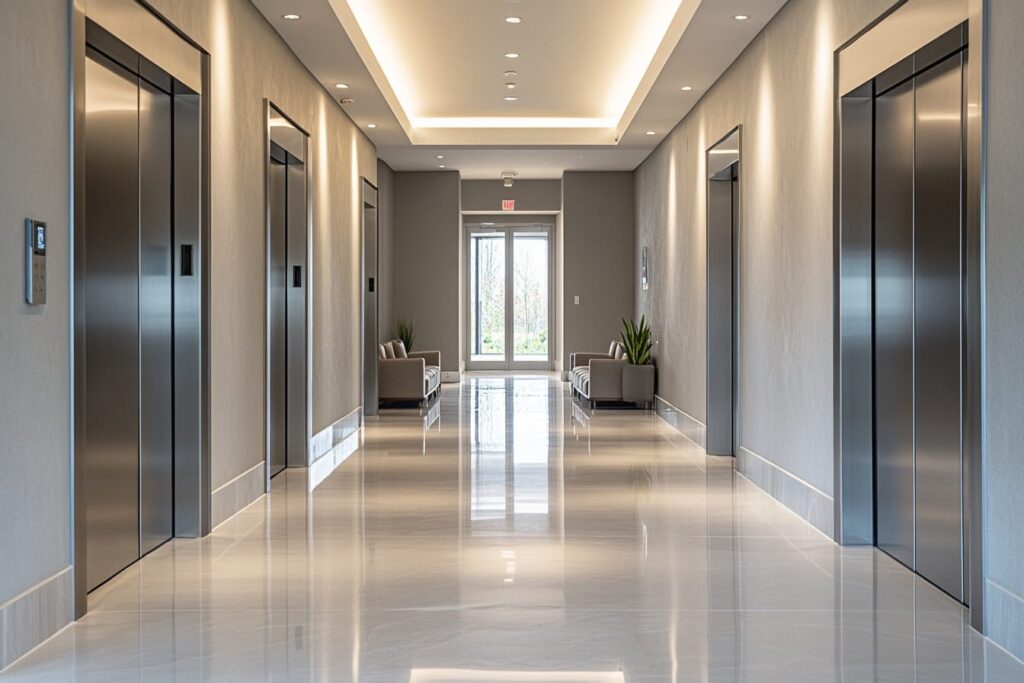
The condo corporation usually comes first in the analysis because Ontario’s condo statute is built around corporate control of common-element spaces. The lobby is not just a neutral hallway. In most buildings, it is part of the shared property the corporation is required to manage and administer.
The Lobby Is Usually A Common Element
Ontario’s Condominium Act says common elements are all the property except the units. In practical terms, that usually means spaces like the main lobby, entrance vestibules, hallways, elevators, and other shared access areas fall on the common-element side of the line rather than inside any owner’s private space.
That matters because the legal question is not only who happened to be nearby when the fall occurred. The more important question is who had the duty to keep that shared space reasonably safe. For a lobby, that usually points back to the condo corporation first, even if the corporation carried out that work through staff, management, or outside contractors.
The Condominium Act Deems The Corporation To Be The Occupier
The strongest legal starting point is section 26 of the Condominium Act. It says that, for determining liability resulting from breach of the duties of an occupier of land, the corporation is deemed to be the occupier of the common elements and the owners are deemed not to be occupiers of the common elements.
That is why a condo lobby slip case is usually framed around the corporation rather than around whichever owner happens to live nearby. It also helps explain why “but I own part of the common elements” is not the same thing as saying a unit owner is the occupier for lobby-liability purposes.
The Corporation May Be Sued In Respect Of Common Elements
Ontario’s Condominium Act also says the corporation may, as representative of the owners, be sued in respect of any matter relating to the common elements or assets of the corporation. The Act separately requires the corporation to obtain and maintain insurance against its liability resulting from a breach of duty as occupier of the common elements or land the corporation holds as an asset.
That does not turn every lobby incident into a winning case. It does explain why the corporation is usually the right starting point when the hazard is tied to lobby upkeep, wet-floor response, entrance matting, maintenance, or common-area safety procedures.
When Other Parties May Also Be Liable
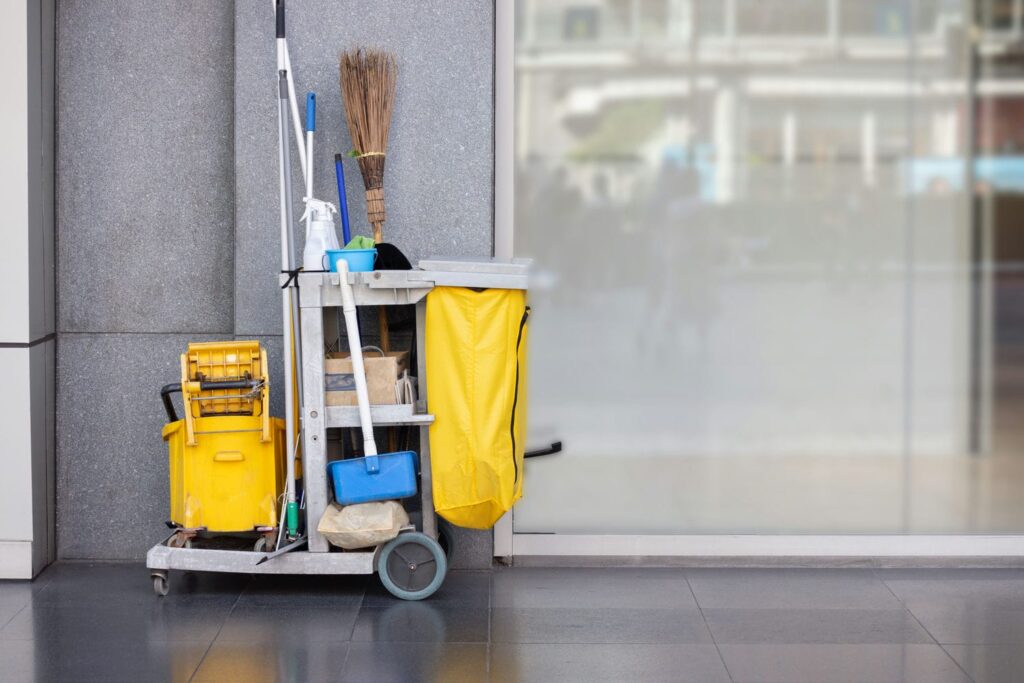
Starting with the condo corporation is sensible, but stopping there too early can be a mistake. Condo lobby falls are sometimes shaped by contract work, daily operations, or individual conduct that goes beyond the corporation’s formal role on paper.
Contractors Can Matter If They Controlled The Hazardous Work
The Occupiers’ Liability Act directly addresses damage caused by the negligence of an independent contractor employed by the occupier. That means a cleaning company, floor-care contractor, or winter maintenance contractor can matter a great deal if the unsafe condition arose from work it was assigned to perform.
Just as important, a contractor’s involvement does not automatically remove the corporation from the picture. The Act’s contractor provision turns on whether the occupier acted reasonably in entrusting the work, whether it took reasonable steps to check competence and proper performance, and whether it was reasonable for the contractor to do the work in the first place. So the contractor question often expands the analysis rather than ending it.
A Management Company May Matter If The Facts Show Real Control
A property manager is not automatically liable simply because it was involved in the building’s operations. The real question is whether the facts show responsibility for and control over the condition of the premises, the activities carried on there, or the response systems meant to deal with hazards in the lobby. That is where the Occupiers’ Liability Act definition becomes important.
So, if the evidence shows the management side set the inspection schedule, handled contractor direction, decided when mats were deployed, or controlled the response to recurring water or slush in the lobby, that may matter. The title “property manager” by itself does not decide the issue. Control does.
A Resident Or Visitor May Matter If Their Own Conduct Created The Hazard
The condo corporation is usually the occupier of the lobby, but another person can still matter if the evidence shows that person directly created the dangerous condition. A spilled drink, dragged-in mess, toppled caution sign, or other immediately created hazard can change how responsibility is analyzed.
That kind of issue is highly fact-driven. The important point is that control of the area and creation of the hazard are not always the same thing. A condo corporation may control the lobby in general, while a specific person may still have played a meaningful role in creating the immediate risk.
Common Condo Lobby Hazard Scenarios That Change The Liability Analysis
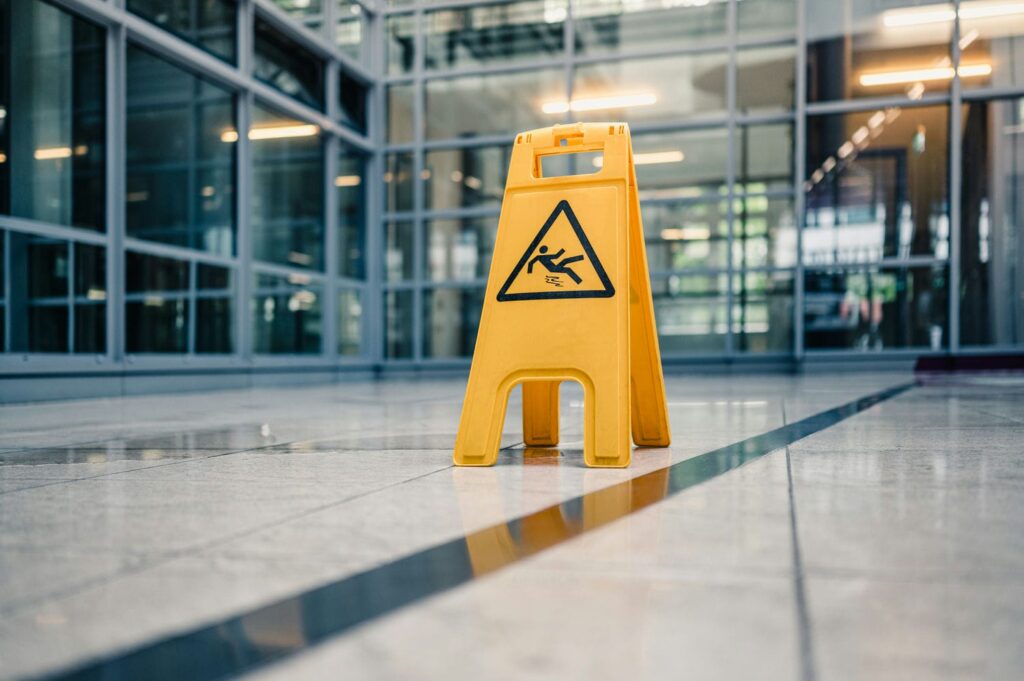
Condo lobby falls are not all the same. The liability picture can change sharply depending on whether the danger came from weather, cleaning activity, a building defect, or a recurring maintenance problem. That is why a good intake starts with the exact source of the hazard, not just the location of the fall.
Tracked-In Rain, Snow, Or Slush At The Entrance
This is one of the most common condo-lobby patterns. Someone enters from outside, moisture collects near the vestibule, the mat coverage is too short or badly placed, and water or slush spreads onto a polished or smooth floor. In winter, this kind of case can also raise the separate snow-and-ice notice issue under Ontario’s Occupiers’ Liability Act if the injury was caused by snow or ice.
The liability question then becomes more specific. Was the condition foreseeable? Were mats adequate? Was the area being checked often enough? Was there a recurring seasonal problem that the building knew about? In many files, the answer turns less on one puddle and more on the system, or lack of one, behind the entrance response.
Freshly Mopped Floors Or Cleaning Residue
Some lobby falls have nothing to do with weather at all. They happen because the floor was just mopped, cleaning residue reduced traction, or caution signs were missing, poorly placed, or easy to miss in a busy entrance area.
These cases often pull the contractor or cleaning process into focus faster than a winter case does. The key questions become who performed the work, what warnings were used, how long the floor remained unsafe, and whether the lobby was reopened too quickly.
Leaks, Persistent Water, Or Flooring Defects
A condo lobby can also be unsafe because of a leak, recurring pooled water, worn flooring, curled mats, or a poor surface transition. In those cases, the file starts to look less like a temporary spill case and more like a maintenance or repair case.
That shift matters because recurring conditions are often easier to prove through records and prior complaints. A one-time spill may create a short timing fight. A repeated leak or worn-surface problem can create a knowledge-and-response issue that spans weeks or months.
Poor Lighting, Missing Mats, Or Inadequate Warnings
Not every lobby hazard is liquid on the floor. A dim entrance, poor sightline, missing mat, inadequate mat size, or weak warning practice can all affect whether the occupier took reasonable care in the circumstances. Ontario’s Occupiers’ Liability Act frames the duty in terms of reasonable care to see that people are reasonably safe while on the premises.
That means the analysis is not limited to whether someone cleaned up after the problem appeared. It also asks whether the lobby setup itself made the hazard more likely or harder for a visitor to detect in time.
What Evidence Usually Decides Liability In a Condo Lobby Case

Condo lobby cases are often won or lost on records. Because many buildings have cameras, staff, contractors, and written procedures, there is usually more evidence available than in an ordinary sidewalk fall. The challenge is preserving it before it disappears.
Security Footage And Incident Reports
Security footage can show the exact condition of the floor, whether a warning sign was present, whether mats were in place, and how long the hazard existed before the fall. In a condo building, that can be much more powerful than a later verbal description.
Incident reports matter too, especially where concierge or front-desk staff documented what they saw. But an incident report should not be treated as a complete substitute for your own evidence. It is one record, not the whole case.
Cleaning Logs, Contractor Agreements, And Maintenance Records
These records often decide who really controlled the risk. A cleaning log may show when the area was last inspected. A contractor agreement may show who was responsible for mat placement, mopping, leak response, or wet-floor checks. A work order may reveal that the building already knew about a recurring hazard.
They also help test the defence story. It is one thing for a building to say it had a system. It is another thing to show that the system existed, was assigned to the right people, and was actually followed on the day of the incident.
Photos, Witnesses, And Recurring-Hazard Proof
Your own photos can still matter even in a camera-heavy building. Close shots help show water, slush, footprints, mat edges, or warning-sign placement. Wide shots help show the entrance layout, lighting, and the path people had to take through the area.
Witnesses matter because they can speak to duration and repetition. A witness who says the lobby was always wet after storms, or that the mat was visibly soaked and undersized, can be more valuable than someone who only saw the fall itself.
Condo Rules And Common-Element Responsibility
Condo declarations, by-laws, rules, and management arrangements can help clarify how the building allocated maintenance tasks and common-area expectations. The corporation’s statutory duty to control, manage, and administer the common elements is the legal backdrop that makes these documents useful.
These documents do not override Ontario’s occupier-liability framework. But they can help identify whether the lobby condition was something the building had already anticipated, regulated, or assigned to a contractor or management process.
Does Ontario’s 60-Day Snow-And-Ice Notice Rule Apply To a Condo Lobby Fall?

This is where many condo-lobby readers get surprised. An indoor fall can still require a snow-and-ice notice review if the injury was caused by snow or ice, including tracked-in winter material or melt tied to it. Ontario’s Occupiers’ Liability Act is focused on the cause of the injury, not simply the fact that the fall happened inside a building.
It Can Matter In Winter-Related Lobby Falls
Ontario’s Occupiers’ Liability Act says that no action shall be brought for damages for personal injury caused by snow or ice against the listed persons unless, within 60 days after the injury, written notice is personally served or sent by registered mail, and the notice must include the date, time, and location of the occurrence. The listed persons include an occupier and an independent contractor employed to remove snow or ice on the premises during the relevant period.
So, if the real problem in the lobby was tracked-in snow, ice, or slush, you should not assume the indoor setting removes the notice issue. It may still need to be assessed right away. Waiting to sort that out can create a technical problem before the rest of the claim is even built.
Not Every Condo Lobby Fall Is A Snow-And-Ice Notice Case
At the same time, not every condo-lobby fall belongs in the 60-day box. If the hazard was a spilled drink, leftover cleaning product, a leak unrelated to winter conditions, or a flooring defect, the snow-and-ice notice rule may not be the right lens at all.
That is why the intake question has to be specific. Do not just ask whether the floor was wet. Ask why it was wet. A winter-related cause and a non-winter cause can create very different timing and liability issues even in the same lobby.
Where To Read More On The 60-Day Notice Rule
If the fall involved tracked-in snow, slush, or winter melt, the 60-day notice rule for snow and ice slip claims sets out who must receive the notice, what it should include, and why that deadline is separate from the ordinary lawsuit limitation period.
The main point here is simple. Do not wait to “see how the injury feels” before checking the notice issue. In winter-related premises claims, early delay can be more damaging than people realize.
What If The Fall Happened Just Outside The Building Instead Of In The Lobby?
A lot of readers say “condo lobby” when the fall really happened just outside the front doors. That distinction matters because the right legal framework depends on who controlled the exact spot where the fall happened. A private entrance apron is not the same thing as a municipal sidewalk, even if both are near the same building.
Private Condo Entrance Areas And Condo-Controlled Walkways
Many entrance pads, private access ways, vestibule approaches, and condo-controlled outdoor paths still fall on the private-property side of the line. In those cases, the occupiers’ liability framework usually remains the place to start, and the 60-day snow-and-ice notice issue may still need to be reviewed if snow or ice caused the injury.
The key is to identify the exact surface. A few steps can change the legal path completely. That is why photos, landmarks, and entrance layout matter so much in winter condo cases.
City Sidewalks Raise A Different Legal Framework
If the fall happened on a municipal sidewalk outside the condo property, Ontario’s Municipal Act or, in Toronto, the City of Toronto Act may control instead. Those statutes use a different notice framework and, for sidewalk snow-and-ice injuries, a gross-negligence standard and a short 10-day written notice rule.
When the fall happened on a city sidewalk rather than in the lobby or on condo-controlled property, the rules for suing a city over an icy sidewalk in Ontario are the ones that govern the claim.
What To Do Right After A Toronto Condo Lobby Slip And Fall

The first few steps after a condo lobby fall can make a major difference. Condo buildings often have better records than other premises, but they also tend to cycle through staff, footage retention periods, and contractor logs quickly. That means evidence can disappear faster than people expect.
Step 1: Report The Fall To Concierge Or Building Management
Tell building staff what happened and ask whether an incident report will be created. If a report is made, note the name of the person who took it and the time it was reported.
That helps in two ways. It creates a building-side record, and it gives you a clearer starting point for what the condo knew and when it knew it.
Step 2: Photograph The Floor, Mats, Signs, And Entrance Area
Take both wide and close photos. Show the wet area, the mat coverage, any warning signs, the lighting, nearby doors, and the surrounding layout.
In condo cases, the layout itself often matters. A soaked mat, a slick floor transition, or the lack of an absorbent walkway can be as important as the liquid on the ground.
Step 3: Ask That Camera Footage Be Preserved
This step matters more in condo cases than in many other slip-and-fall settings. Lobby cameras often capture the condition, the timing, the response, and the fall itself.
A quick preservation request can be important because footage is often overwritten as part of normal building operations. Waiting too long can turn a strong piece of evidence into a missing one.
Step 4: Get Medical Care And Start A Timeline
Get assessed as soon as reasonably possible, especially if you may have injured your head, hip, wrist, back, or shoulder. A clean early record helps connect the incident to the symptoms that followed.
Then start a short timeline while the facts are fresh. Note the time, the location, who you spoke to, what the floor looked like, and what changed in your symptoms over the next few days.
Talk Through Who May Be Responsible For Your Condo Lobby Fall
When a condo lobby fall happens, the hardest part is often not proving that someone was hurt. It is identifying who controlled the common area, who maintained it, whether a contractor was involved, and whether a winter notice issue is already running in the background. The sooner that work starts, the easier it is to preserve video, logs, contracts, and other records that often decide the file.
At HSK Law, we offer a free, no-obligation consultation, contingency-based representation, direct lawyer access, and a client-first approach built around quality over quantity. Our site also says the firm brings 30+ years of collective personal injury experience and has helped 1,000+ clients through personal injury claims. If you want to understand how we handle slip and fall claims, or you are ready to talk through who may be responsible for a condo lobby fall, get in touch with our team.
Frequently Asked Questions
No. The condo corporation is usually the first party to examine because Ontario’s Condominium Act deems the corporation to be the occupier of the common elements, but liability still depends on the facts and whether reasonable care was taken in the circumstances.
Yes. Ontario’s Occupiers’ Liability Act says there can be more than one occupier of the same premises, which is why a contractor or another party with real control may also matter depending on the facts.
Generally, no. Ontario’s Condominium Act says the corporation is deemed to be the occupier of the common elements and the owners are deemed not to be occupiers of the common elements. A separate person can still matter if that person directly created the hazard, but that is a different question from who the occupier is.
It can, depending on what actually caused the fall. If the injury was caused by snow or ice, including winter material tracked into the lobby, Ontario’s Occupiers’ Liability Act may require written notice within 60 days.
That depends on whether the exact area was still condo-controlled private property or a municipal sidewalk. A private entrance area usually points back to occupiers’ liability. A city sidewalk can raise the Municipal Act or the City of Toronto Act instead.
The most helpful evidence is usually security footage, incident reports, photos, cleaning logs, maintenance contracts, witness evidence, and records showing who controlled the lobby or the work being done there. In condo cases, those documents often tell you more than the title of the defendant ever will.
The legal claim is usually framed against the party or parties said to be responsible, not simply against an insurer as a substitute defendant. That said, Ontario’s Condominium Act requires the corporation to obtain and maintain insurance against liability resulting from breach of duty as occupier of the common elements or land it holds as an asset.
Book a FREE consultation
Submit the form below or call (416) 238-7105 to find out if you have a claim!